

The critical establishment, out of habit or convenience, files Eva & Franco Mattes under first-wave net art, or dismisses them as 1990s pranksters - another entry in the overstuffed archive of digital art's early days. It's a misreading that betrays the restlessness at the heart of their project. The Mattes have never allowed their work to be vitrined as artifact. Every technological shift simply reanimates their core provocation; their practice works as a set of live experiments in how power, authorship, and agency are distributed across media. Their output demands to be met on its own terms: as something unfinished, always in negotiation with the present.
Situating the Mattes requires more than a footnote in net art's chronology. It calls for a reckoning with the recursive debates that have stalked the twentieth century - arguments not only about what art is, but about who gets implicated, exposed, or transformed in the process. Their work operates less as a discrete object and more as a charged site: a live wire where theory and lived experience collide, often with unpredictable consequences.
The Mattes' inheritance is not simply a lineage, but a set of tactics and antagonisms. Stolen Pieces (1995-97) makes the point with criminal clarity: fragments of canonical works - Duchamp's Fountain among them - lifted from museums and displayed as trophies. What might seem a juvenile riff on the readymade is, in fact, a precision attack on the canon's sanctity. Artistic authority, they assert, is as vulnerable and material as the objects it claims to protect; it can be stolen, appropriated, or remixed at will. This logic - irreverent but diagnostic - runs through everything that follows.
Their tactics are a volatile synthesis of art history's subversive strains. From the Situationists, the Mattes take détournement, hijacking systems or images and turning them against themselves: Nike Ground (2003) brings this to a civic scale, orchestrating a fake corporate takeover of Vienna's Karlsplatz convincing enough to spark real debate. Their cloned websites in the late 1990s - JODI's among them - weaponize the early web's porous boundaries, where copies and originals blur. From Warhol, they borrow the logic of the portrait as a lens on celebrity, turning it toward the avatar. And from the performance art of the 1960s and 70s, they inherit the body as a site of risk - except the Mattes often remove the body altogether, leaving only the stakes behind.
But perhaps their most consequential move is a reorientation of critique itself. Where institutional critique - Haacke, Fraser - turned the museum inside out, the Mattes set their sights on the invisible infrastructure of contemporary life: the game server, the video feed, the faceless moderation desk. They redraw the field. If there's a single throughline to their legacy, it's platform critique before the platform had a name, anticipating how digital infrastructures would come to shape not just art, but subjectivity itself.

What emerges most vividly, when you look past the familiar labels, is the Mattes' sense of timing. To understand their practice, you have to move chronologically, with one eye always on the media of each era - every project is a kind of incision into the technical unconscious of its moment.
1995. Stolen Pieces. The Mattes stalk the halls of European and American museums, extracting chips of art history - a chip of Duchamp's Fountain pocketed, a Swiss Army knife their scalpel. The web is a rumor, dial-up still a shriek in the night, and only obsessives are online. Their first act is physical, not virtual: a hand-to-canon confrontation that rewrites the rules by theft.
1998-99. They seize vaticano.org, clone other artists' sites (JODI, Hell.com), exploiting a moment when the concept of digital authorship is still in flux. In this same window, they conjure Darko Maver - a fictional artist who fools the 48th Venice Biennale into anointing a ghost. The digital is a playground of doubles, and the Mattes play both sides.
2001. Life Sharing detonates the idea of privacy: the Mattes broadcast their home computer - emails, files, everything - as public infrastructure. The dot-com bubble has burst, broadband is overtaking dial-up, and the social web is still a mirage. Hito Steyerl calls it 'abstract pornography.' The Mattes, ever self-deprecating, liken themselves to cavemen with digital bones. Long before tech platforms turn transparency into a business model, the Mattes make exposure compulsory - then dare the public to look away.
2003. Nike Ground. A glass cube announces the transformation of Vienna's Karlsplatz into Nikeplatz. The city, primed by press releases and a slick fake website, actually debates the prank's legitimacy. The Mattes have weaponized the media apparatus of the moment, making the city itself the punchline.
2006-07. Peak Second Life: brands and institutions chase virtual real estate, the iPhone debuts, Facebook opens its doors. The Mattes go native, immersing themselves in this synthetic world for a year before unveiling 13 Most Beautiful Avatars - first in-world, then at Columbia and Postmasters IRL. Their Synthetic Performances, staged at once in digital and physical venues, remake classic endurance art for the clickable age. The avatar, for the Mattes, is aspirational - a premonition of Instagram's performative selfhood.
2010. Chatroulette explodes into the culture, tens of thousands of strangers flitting past each other on camera. The Mattes stage No Fun: Franco hangs from the ceiling in a slow-motion tableau, his silent audience a stream of gawkers, voyeurs, and quick exits. It premieres at Postmasters, then Basel, alongside Freedom. By October, Instagram launches. The Mattes, as ever, are already probing the reaction video and the stranger-as-audience before these formats have names.
2015. Dark Content premieres exclusively on Tor, installed at Essex Flowers in New York and Carroll/Fletcher in London. Adrian Chen's Wired reporting has just begun to expose the hidden labor of content moderation. The foundational texts - Roberts's Behind the Screen, Gray and Suri's Ghost Work, Zuboff's The Age of Surveillance Capitalism - are still years away. The Mattes are diagnosing the invisible work of the digital back office before it's legible to the academy.
2020. The Bots: actors film themselves at home on their phones, reciting moderator confessions as if performing makeup tutorials. The world has retreated indoors, into screens.
2026. Rage Bait at Venice. Generative AI saturates the culture, memes become political ordnance, a folkloric cat is processed through a model and emerges as wood sculpture. The Mattes dissect platform emotion as a resource to be mined - what was once theory is now common sense.
The pattern is relentless: the Mattes arrive at the interface just as it turns into culture, their work a kind of field report from the frontlines of mediation. Theories and critics are left to play catch-up, naming what the Mattes have already laid bare. Call it practiced method: embed, observe, and chart the psychic fallout as people and platforms collide.

Two neighboring traditions offer partial lenses on the Mattes - and both ultimately misfire in illuminating ways.
Relational aesthetics, as Bourriaud imagined it, casts art as the engine of pleasant social exchange, often contained within gallery walls. Claire Bishop's critique sharpens the definition, arguing that the strongest relational work is adversarial, marked by friction and discomfort rather than consensus. The Mattes, however, evade both models. Their participants aren't art world regulars or willing collaborators. The Counter-Strike players in Freedom didn't sign up to be part of a performance; they logged in to play. The Chatroulette users in No Fun are thrown into the work without warning, recoiling, laughing, or fleeing. Emily's Video erases the original stimulus, leaving only the witnesses' faces as evidence. These are collisions - experiences both real and raw, staged in spaces that were never intended to host art.
On a parallel axis sits post-internet art, sometimes literally next door to the Mattes (see 260 Madison, where Simon Denny and Josh Kline are neighbors). Artie Vierkant's 2010 definition frames post-internet art as obsessed with the migration of images and objects between screen and gallery, its aesthetic marked by renders, stock photos, and a polished, corporate gloss. While the Mattes at times mirror this surface, their true material is not image but behavior. Where post-internet art investigates what circulation produces, the Mattes tear into the circuitry itself, exposing humans snared inside the system - unaware and implicated.
If the Mattes' oeuvre reads like a crash course in media theory, it's no coincidence. McLuhan's maxim - the medium is the message - plays out with brutal clarity in Freedom, where game code, not the artist, dictates the work's outcome. Baudrillard's notion of simulation is pushed to its bleakest in Darko Maver, where fictional biography and genuine atrocity imagery are fused into a single, disquieting artifact. Debord's spectacle, by the time of Rage Bait, transforms into a hyperactive marketplace for outrage. Even Weizenbaum's ELIZA, invoked at Venice, lingers as a warning: people are still eager to ascribe empathy and understanding to machines that offer only reflection. The Mattes test these theories until they become lived experience.
Threaded through their practice is a recurring object: the leftover, the residue, the trace. Emily's Video persists only as the documented reactions of its viewers. Killing Zoe (2008) births a new work from a portrait destroyed. What Has Been Seen (2017) stages a taxidermy cat alongside a microwave and an erased hard drive. Ceiling Cat, once a meme, returns to physical form. Cursed Cat is run through a generative model, then reemerges as carved wood and Murano glass. The Mattes obsess over what remains after experience traverses the interface - a substance part human, part platform, stubbornly refusing to belong to either world.
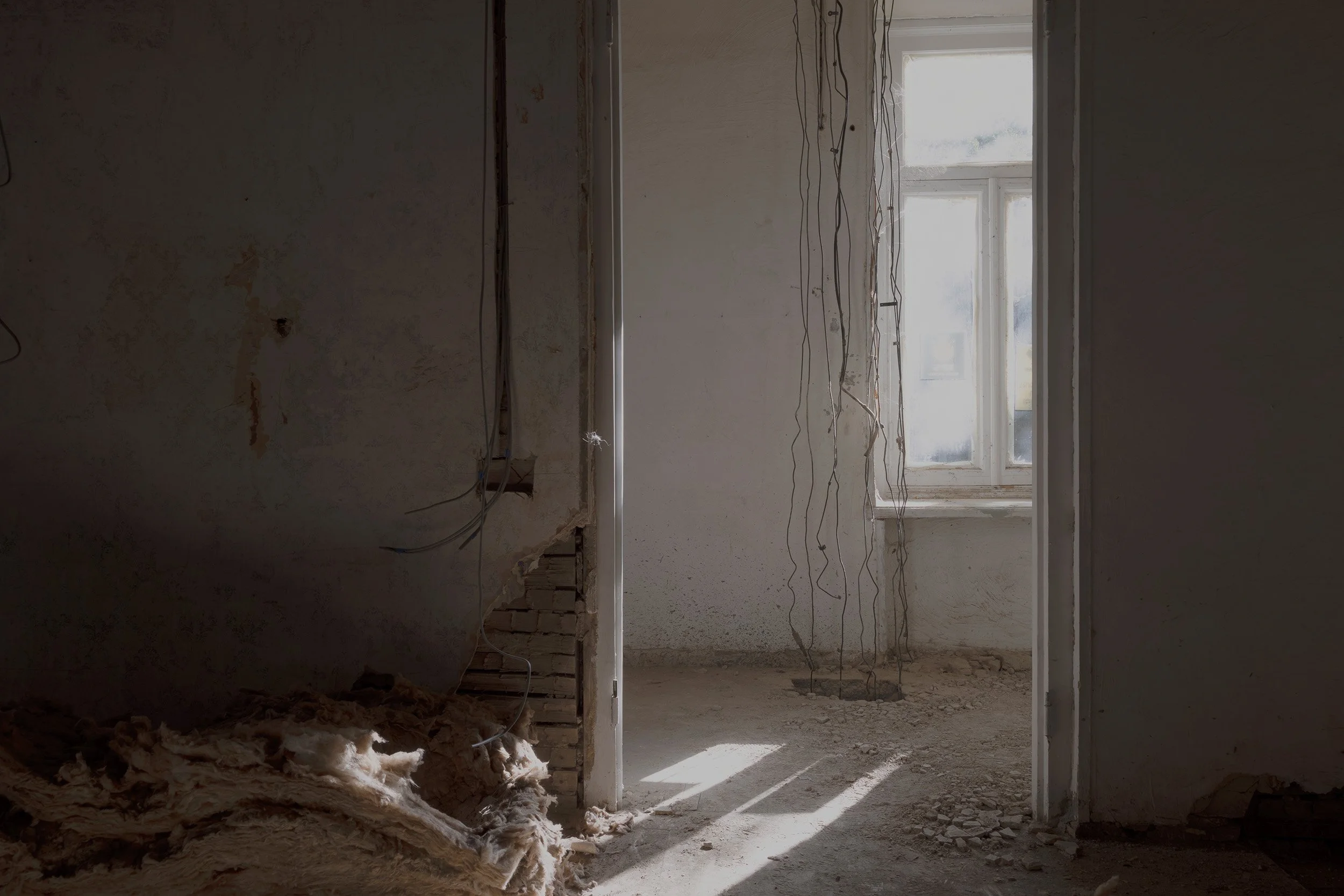
 Ruofan Chen. Vessels, 2026. Fuel feedline, sawdust, woodchip.
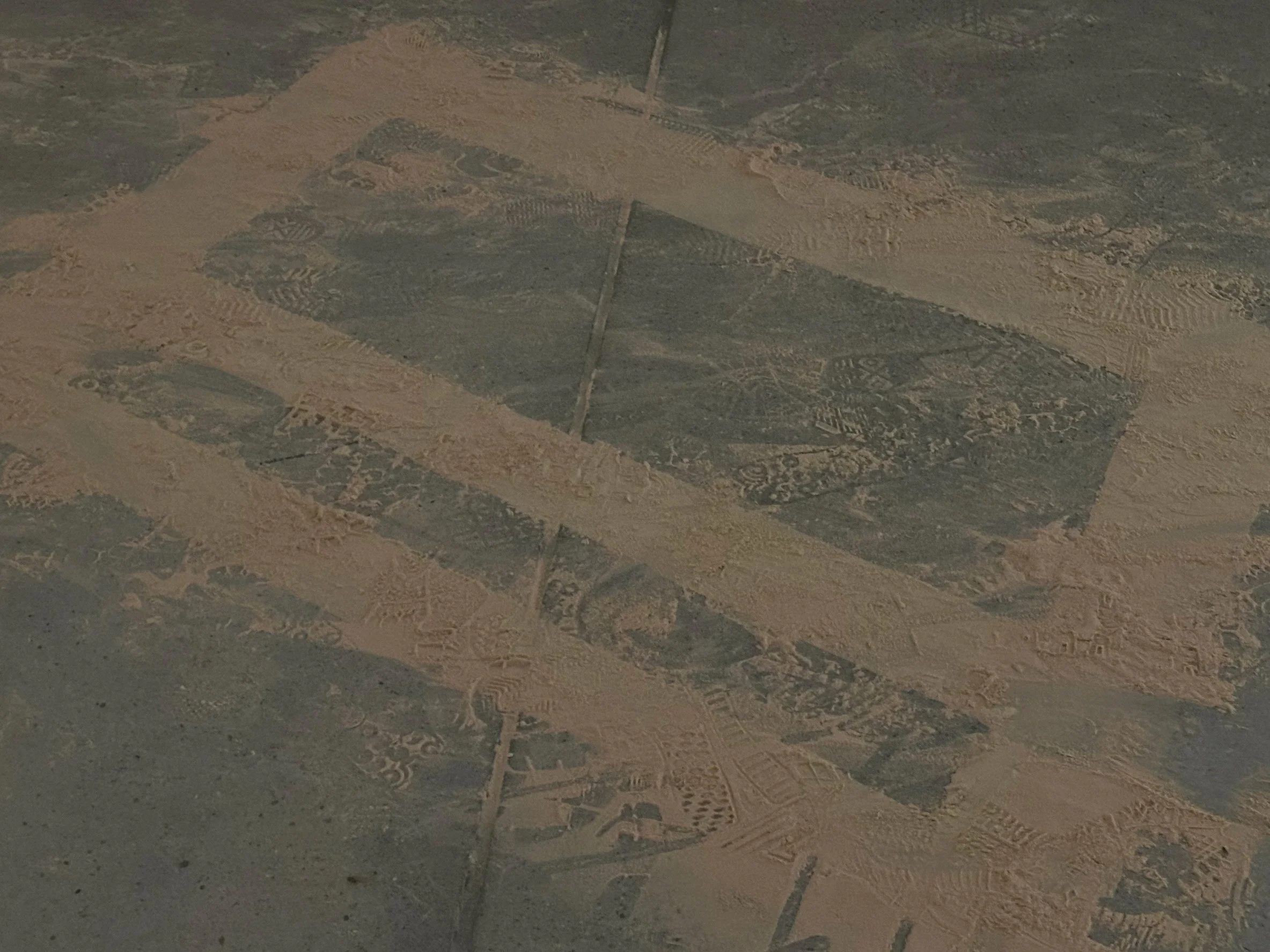 Ruofan Chen. Dust, 2025. (Close up).
 Ruofan Chen. Solace in the bench, 2024.
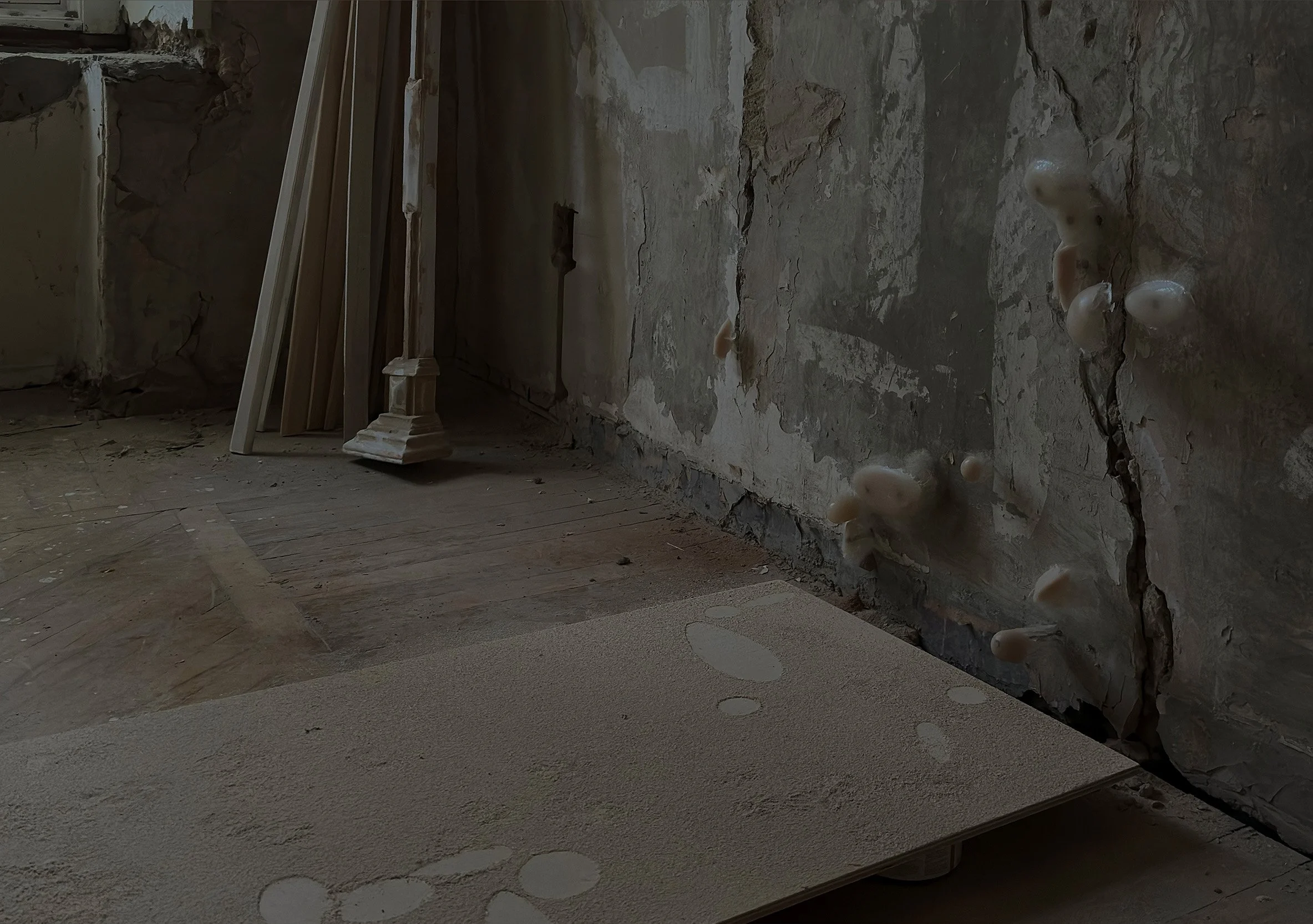 Ruofan Chen. Penetration, 2026. Silicone, Georgian wool, canned cat food, sawdust, wood, and bamboo. Dimensions variable.
 Ruofan Chen. Vessels, 2026. (Detail).

And so the question inevitably circles back to the glass case: the fate of art under institutional stewardship. The Whitney stores Freedom; SFMOMA acquires Ceiling Cat, only for the Mattes to release the image into the wild, puncturing the logic of exclusivity that underpins the art museum. The very sites once targeted by institutional critique now serve as mausoleums for platform critique. Andrea Fraser's warning - that critique risks ossifying into institution - echoes loudly, but the Mattes make even that uneasy: their work resists enclosure. Players move on from Freedom to new games; moderators shift to new platforms; the churn of technology easily outpaces the museum's acquisitive logic. The canon, built for static objects, struggles to contain practices rooted in conduct, participation, and flux.
A canon wants closure; the Mattes' work is built from ongoing conduct, a current that keeps flowing after the piece is archived.
Whether the canon can ever hold that remains an open question.
CREDITS
Artwork by Eva & Franco Mattes
Header by Ruofan Chen
Heavy Dust, 2025. Installation view.
Written by Claro Concetto