

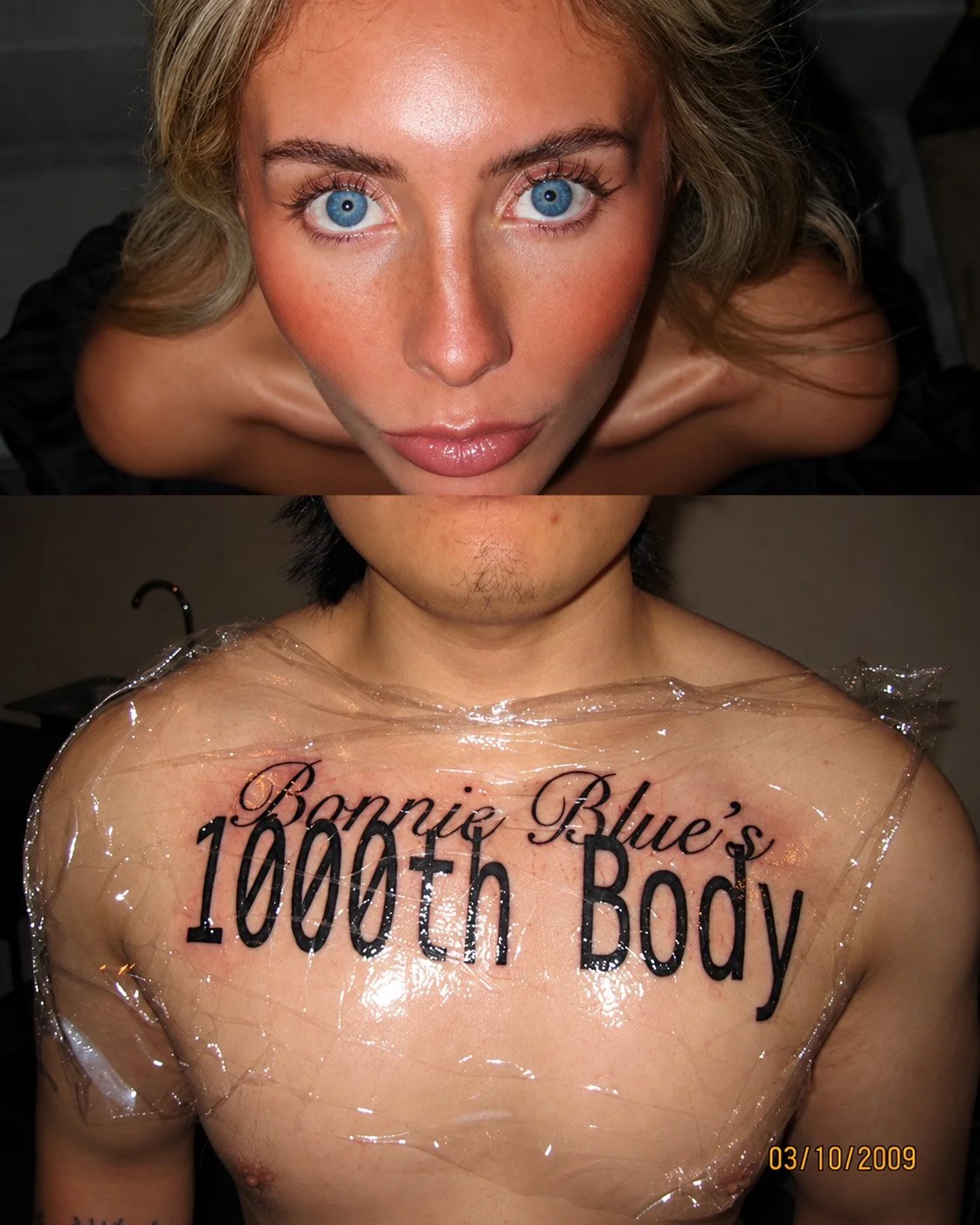
Los Angeles-based artist Tanner Clark cuts the skin off anything middling or timid, finding his material somewhere between controversy and the truth. He moves as fast as the internet does, taking peak sensational moments, memes and relics and setting them as a buffer in the daily doomscroll. From conspiracy to Tung Tung, 9/11 to 7-Eleven, shock and awe to Fortnite manifestos to Bonnie Blue, he hammers every nervous system value at once: advert, anger, awe, anxiety. He is on the zeitgeist like no other.
He works under the name Tanner Clark Fucking Sucks, a handle that holds fittingly for such a character of caricature, one who captures the canon so clearly through his distorted and warped lens on tattooing. He moves between styles, references and degrees of realism with an ease that makes the work difficult to pin to any single aesthetic. The image can be crude, sentimental or deliberately stupid, while the technical execution remains.
“The tattoo becomes both image and commentary, at a time when post-irony feels closer to the sincere than the docile GenZ subway take.”

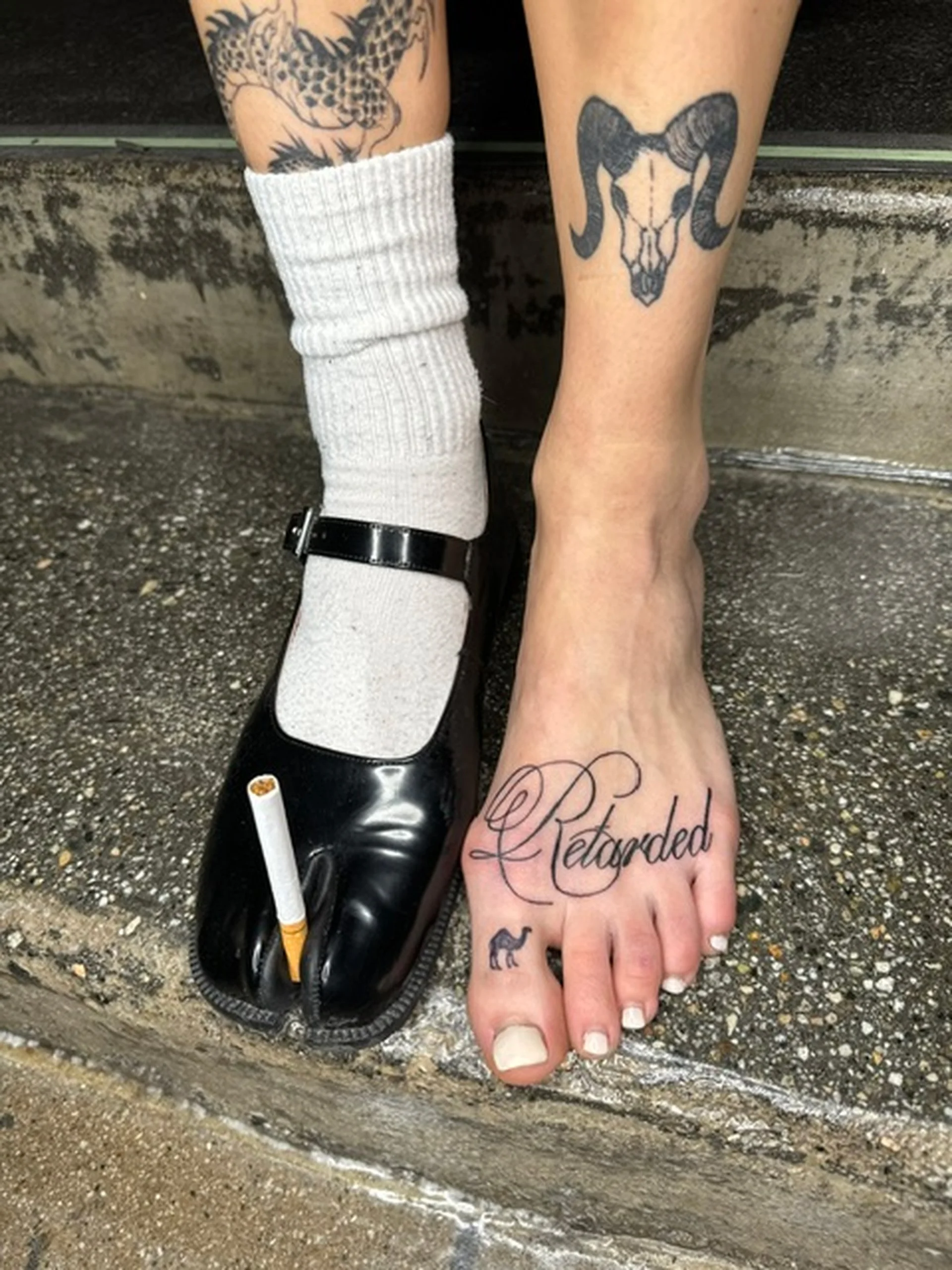
His fans are never left bored. Even if you are questioning whether the tattoos cross the line, you are also left to contend with the absurdity of the original reference. Clark understands the contradiction and capitalizes on the reaction. The tattoo becomes both image and commentary, at a time when post-irony feels closer to the sincere than the docile GenZ subway take. I saw a caption the other day: "I had a dream that Rosa Parks sat on my face and refused to get up." Laughing emojis, logos, a layered linguist of LOL, formatted frame by frame. It is reactionary bait, archetypal jester, clownism, but as with any great artist or clown, those who know understand that the two go hand in hand.
From the perspective of a fellow doomscroller since the age of 2, even the most deep-fried elements of his work speaks like water. He represents a deviation from the expectation, as quality humor should do, repurposing the image and highlighting the extremes. Despite his refusal to posture in a serious format, the work holds weight, ample in thought and in humor. He has what those who capture both the time and an audience possess: an intuition for where to put pressure and what to make.
A true provocateur, Clark occupies a position that feels increasingly rare. There is so much that can be said, but in many ways the work is strongest speaking for itself, and in conversation with its creator. You can see it unfold in his answers here.
How do you introduce yourself these days? Tattooer, multimedia artist, or graphic artist?
I would consider myself an artist, with tattooing as my main medium. Tattooing is definitely the center of what I do right now, but I’m also trying to branch out into other ways of putting my art into the world.
When I first found your work — maybe four years ago — it read as reflective and ironic, very ‘internet looking back at itself.’ Now, with how fast the internet and the culture have mutated, I’d almost argue your work has become reflective of a contemporary format rather than commenting on one. How would you describe what your work is reflecting?
I don’t know if I can pinpoint one specific thing that I want my work to reflect. A lot of it is rooted in absurdity and in trying to make things that haven’t really been seen before within the tattoo/art community. I want to make tattoos that make people stop scrolling for a second and just ponder. I’m interested in pushing the boundaries of what people consider acceptable as a tattoo, because I don’t really believe tattooing has to exist in one particular form. I’m trying to break that stereotype that a tattoo has to look or behave a certain way in order to be valid. My work in this current era is still heavily inspired by meme and internet culture.
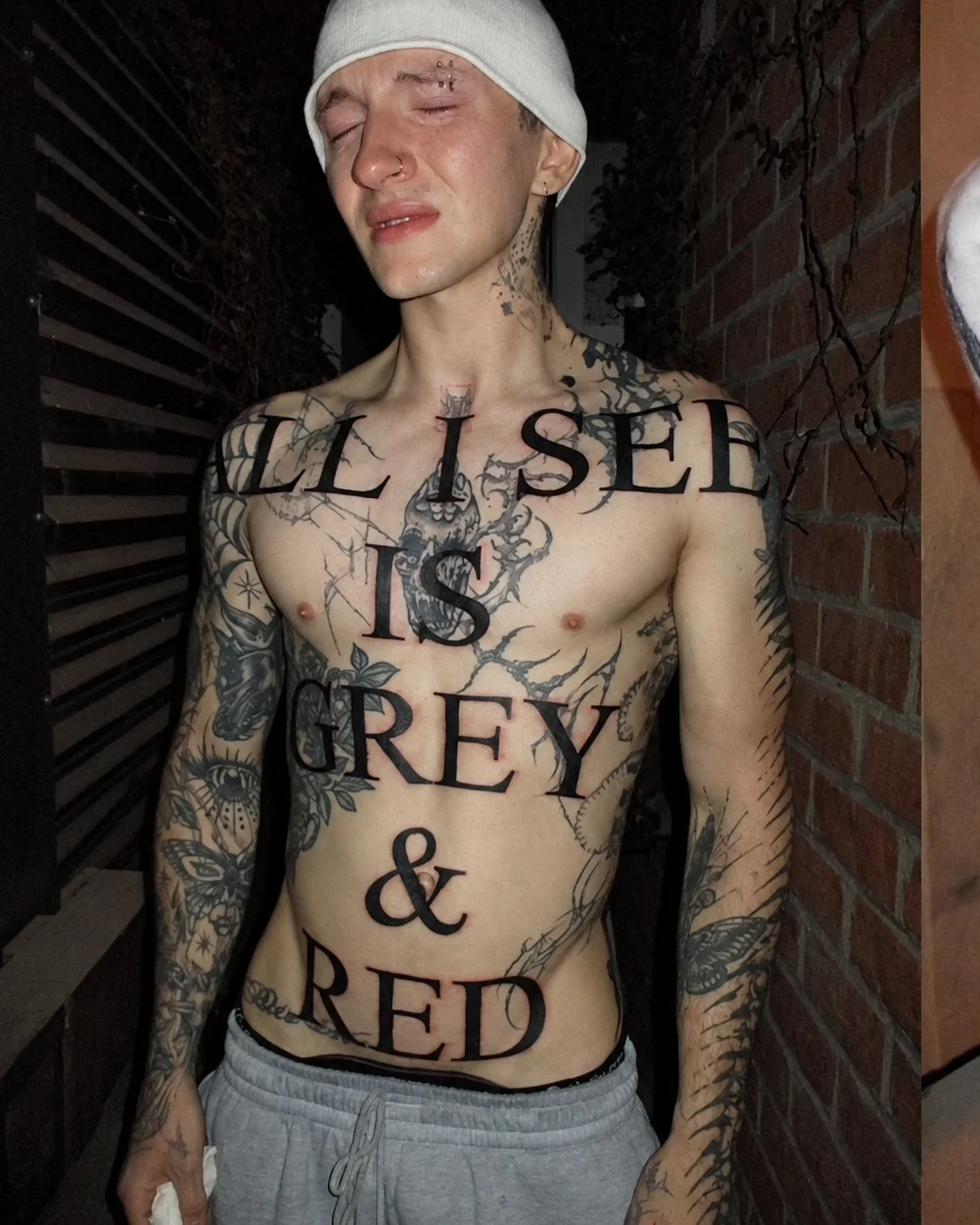 Tanner Clark. All I See is Grey and Red.
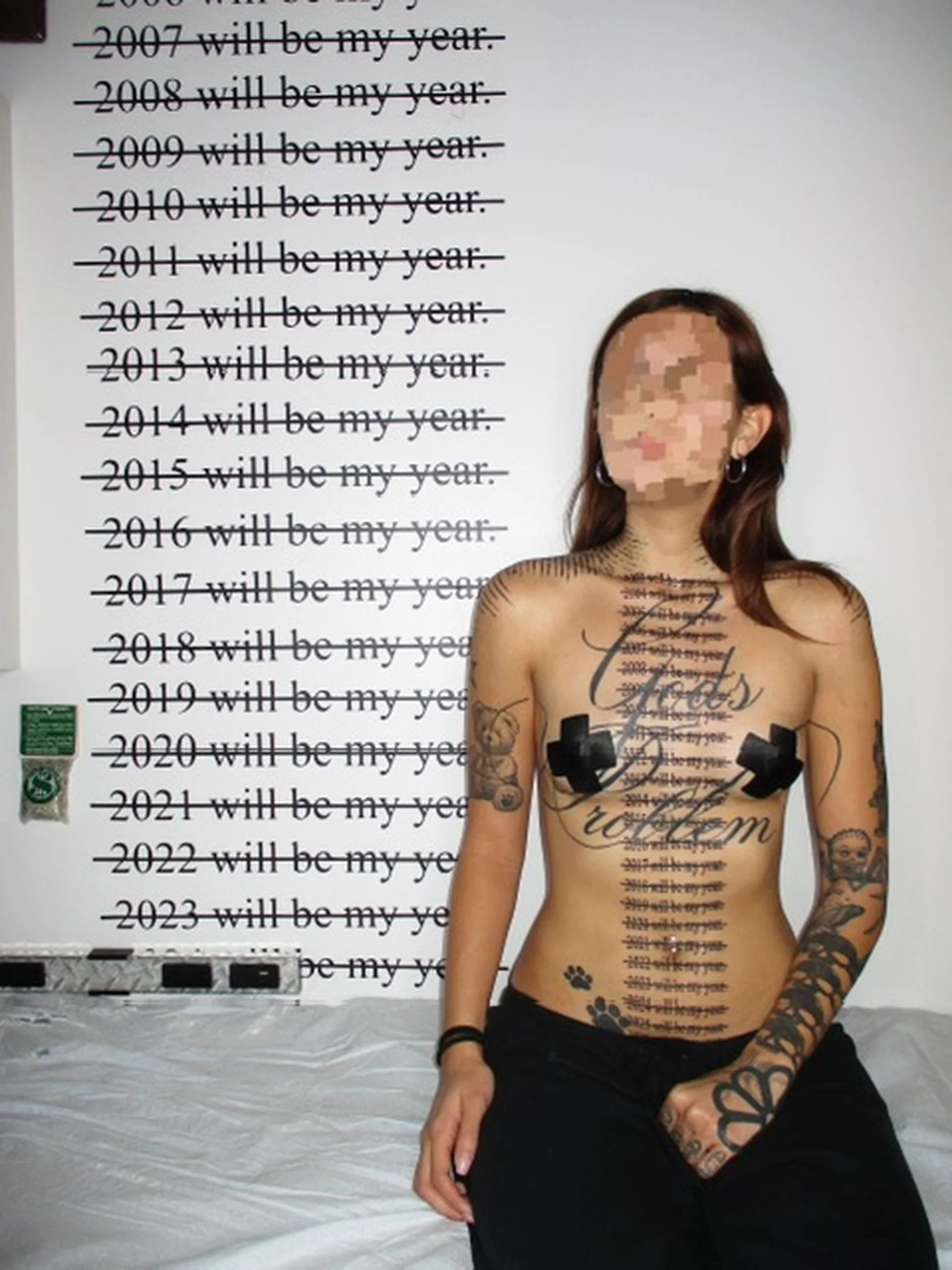 Tanner Clark. God's Problem, c. 2026.
 Tanner Clark. Apple Man, c. 2026.
 Tanner Clark. Sorry, c. 2026.
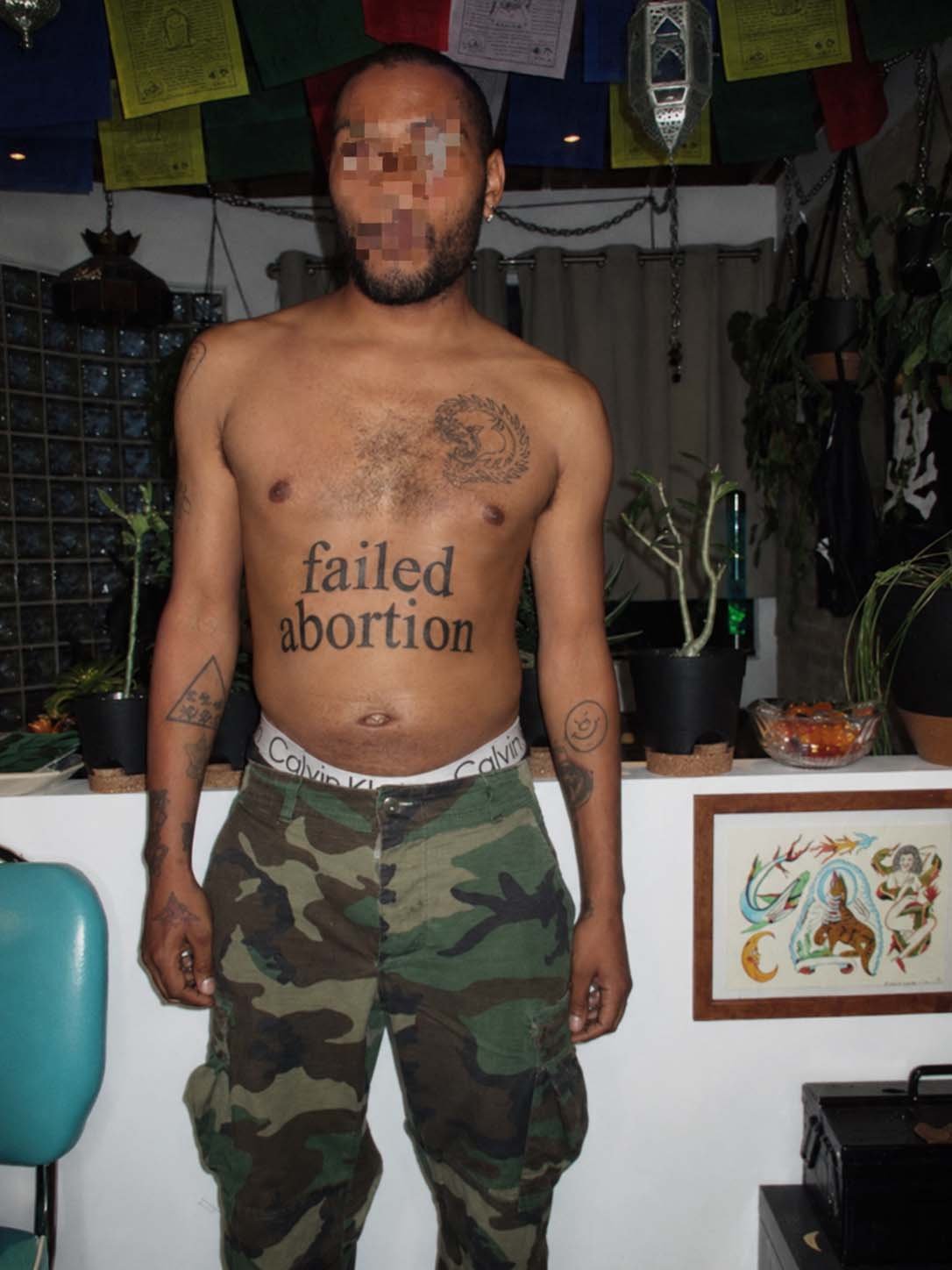 Tanner Clark, Sophie Thatcher, personal editorial.
A lot has changed around you too, a bigger platform, a lot more eyes. Has scale changed what you’re willing to make, how you approach the work? What do you feel protective of in the work as it gets bigger?
The bigger audience hasn’t really changed how I work. I still follow the same instinct to make what feels true to me and let people react however they’re going to react. What the larger audience has done is give me the canvas for some of the really out-there ideas that I might not have been able to find people for before. I’ve realized there really is a niche for everything, and even some of the strangest ideas can find their people very quickly now. If anything, it’s taught me to trust an idea more instead of watering it down. The more people the work reaches, the more people there are to connect with it… or react to it.
When I first found your work — maybe four years ago — it read as reflective and ironic, very ‘internet looking back at itself.’ Now, with how fast the internet and the culture have mutated, I’d almost argue your work has become reflective of a contemporary format rather than commenting on one. How would you describe what your work is reflecting?
I don’t know if I can pinpoint one specific thing that I want my work to reflect. A lot of it is rooted in absurdity and in trying to make things that haven’t really been seen before within the tattoo/art community. I want to make tattoos that make people stop scrolling for a second and just ponder. I’m interested in pushing the boundaries of what people consider acceptable as a tattoo, because I don’t really believe tattooing has to exist in one particular form. I’m trying to break that stereotype that a tattoo has to look or behave a certain way in order to be valid. My work in this current area is still heavily inspired by meme and internet culture.
A lot has changed around you too, a bigger platform, a lot more eyes. Has scale changed what you’re willing to make, how you approach the work? What do you feel protective of in the work as it gets bigger?
The bigger audience hasn’t really changed how I work. I still follow the same instinct to make what feels true to me and let people react however they’re going to react. What the larger audience has done is give me the canvas for some of the really out-there ideas that I might not have been able to find people for before. I’ve realized there really is a niche for everything, and even some of the strangest ideas can find their people very quickly now. If anything, it’s taught me to trust an idea more instead of watering it down. The more people the work reaches, the more people there are to connect with it… or react to it.
Early on you cited Coco Capitán, Basquiat, Mauro Martinez, Eser Gündüz — a mix of fine art, text, and irony. How have your inspirations changed since then?
Those earlier influences will always be part of my foundation. They’re artists I still look up to, and they shaped a lot of how I started thinking about making things. But in the phase I’m in now, I’m really inspired by the tattoo artists and peers around me. A big one is my friend Sandy, @iluvvvlife, who has had a huge influence on the way I think about tattooing, especially the idea that what i’m creating doesn’t need to fit inside a box… it can be whatever I want it to be. But honestly a huge amount of it comes from the internet and just day-to-day life. I joke that when I’m doomscrolling on my phone, I’m doing field research for my job. It sounds stupid, but a random meme can turn into a tattoo idea just as easily as something I notice walking down the street. It could literally be a crack in the sidewalk or my spit on the pavement… if I like the way it looks, I like it. I’m trying to find inspiration in things people normally wouldn’t even think of as tattoo imagery and treat all of it as fair game.
There’s a whole lineage now — ignorant style, post-ironic, meme tattoos, cybersigilism. Where do you actually locate yourself in that, and which of those labels do you reject?
I’d consider myself a hybrid of ignorant style, post-ironic, and blackwork. Honestly it’s whatever you really want to call it. I don’t have one specific name for it, and I don’t really care to. The one label I’d reject is cybersigilism. I definitely do some cyber-oriented things, but cybersigilism isn’t really what I’m trying to do. If somebody really needs a label, I usually just tell them it’s post-ironic, pre-therapy. If they don’t laugh, I tell them it’s Gangnam Style and move on.
Right now I’m intentionally not locking myself into one signature move because it feels way too early in my career to box myself in. I want to stretch across different subjects and aesthetics, test what I’m capable of, and let that range expand before I decide what my lane is supposed to be. Day to day, there isn’t one exact ideation process. Sometimes I’m doing a custom based on a client’s request, and other times I’ll have some insane idea, put it on my Instagram story, and hope somebody wants it. I’ll even do certain ideas for free or discounted just because I want to see them exist on skin. All of those approaches are ways for me to keep pushing the boundaries, broaden what I’m capable of, and figure out how far I can take this.
When someone leaves with a piece by you, what do you want them to walk away and feel? What kind of relationship do you hope they develop with it over time?
I think tattoos mean something different to everybody, so I don’t expect every person to walk away feeling the exact same thing. More than anything, I want somebody to leave feeling new, restored, confident, or just genuinely happy that they did it. I think people sometimes look at absurd tattoos and assume the person getting them doesn’t care about themselves, or that they’re just crazy, and that misses the point. Something doesn’t have to be serious or carry some huge symbolic weight in order to matter. An absurd or funny tattoo can bring somebody an incredible amount of joy, and that joy is no less real just because the image is ridiculous. There’s something freeing about doing something outrageous and realizing that life continues exactly the same afterward. Sometimes the tattoo is just a reminder that life doesn’t always need to be taken so seriously.
Tattooing is also a collaborative process. Someone comes in with a request, a reference, a feeling, and then you have to translate it through your own hand. What part of that exchange matters most to you?
I’m pretty selective with my booking. I go through all of my requests and turn down a lot of projects that I don’t feel align with what I’m trying to put out artistically. Because of that, by the time somebody actually comes into the appointment, we’re usually already on the same page about the direction. For me, the more creative freedom, the better. I’m completely open to collaboration and hearing what somebody wants (it is their body) but I also don’t want to feel boxed into simply executing somebody else’s exact vision. I take a lot of pride in having enough freedom to follow what I’m seeing in my head and turn the project into something I genuinely feel connected to.
When someone leaves with a piece by you, what do you want them to walk away and feel? What kind of relationship do you hope they develop with it over time?
I think tattoos mean something different to everybody, so I don’t expect every person to walk away feeling the exact same thing. More than anything, I want somebody to leave feeling new, restored, confident, or just genuinely happy that they did it. I think people sometimes look at absurd tattoos and assume the person getting them doesn’t care about themselves, or that they’re just crazy, and that misses the point. Something doesn’t have to be serious or carry some huge symbolic weight in order to matter. An absurd or funny tattoo can bring somebody an incredible amount of joy, and that joy is no less real just because the image is ridiculous. There’s something freeing about doing something outrageous and realizing that life continues exactly the same afterward. Sometimes the tattoo is just a reminder that life doesn’t always need to be taken so seriously.
What’s the most memorable work to date, and if that’s impossible to answer, the one that changed how you think about what you do?
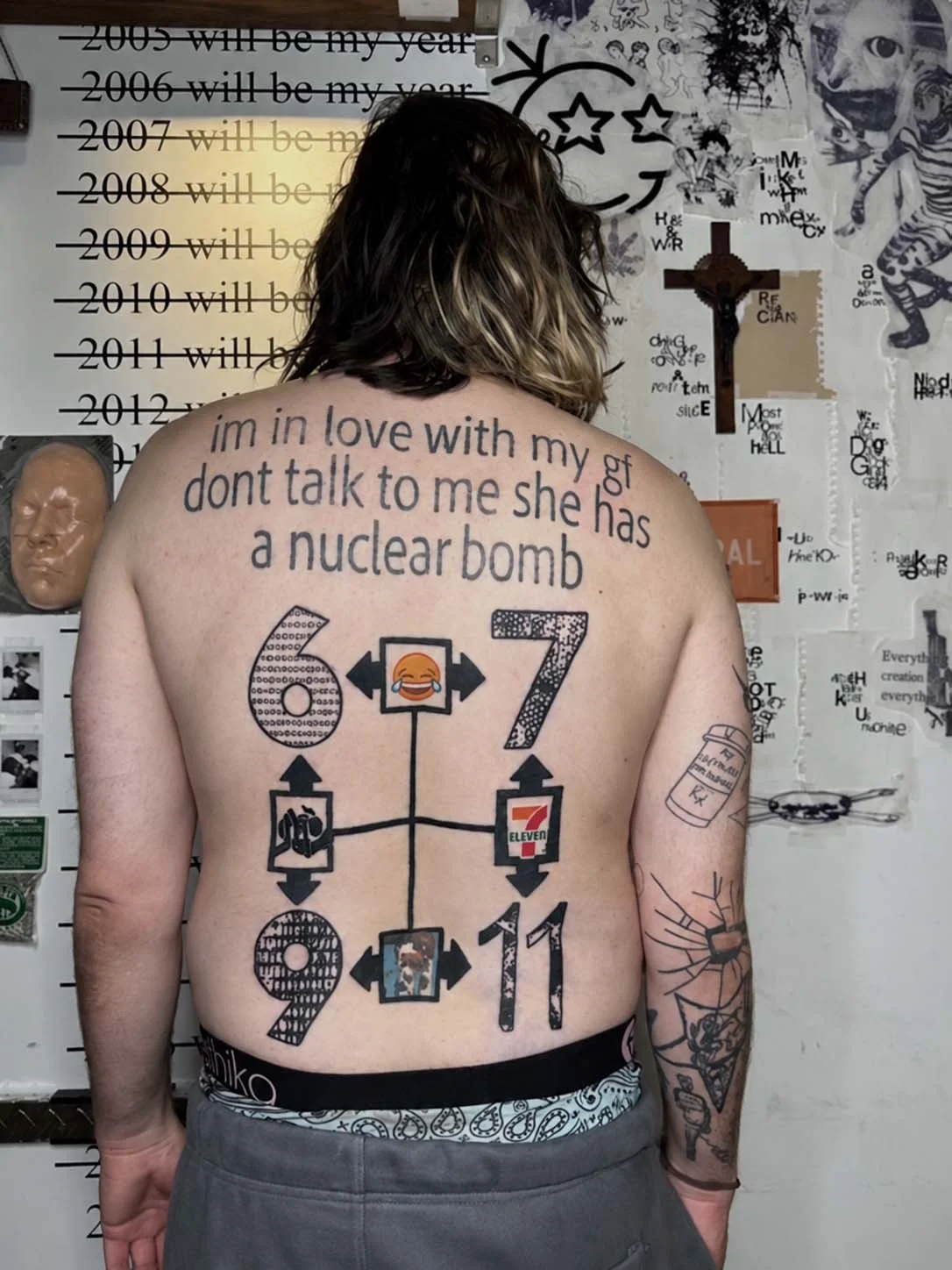
Picking just one is almost impossible, because I feel like I’ve done so many things that I can’t believe I’m seeing with my own eyes. Recently, though, a couple really stand out: the 6/7 9/11 meme back piece and the Osama Bin Laden / Charlie Kirk hybrid tattoo. Seeing tattoos like that physically existing on somebody’s skin is insane to me. I’m seriously grateful to the clients who are willing to be the canvases for those ideas, because without them I’m nothing. The idea only becomes real because somebody trusts me enough to wear it. The Osama piece is especially surreal because I can’t even keep it up on Instagram because of the platform’s guidelines. Being able to make work that goes beyond what social media will even allow me to show makes it feel even crazier. To me, pieces like that push the envelope not only for me and the client, but for what people expect to see in tattooing as a whole.
You’ve described yourself as someone who likes to get a reaction. Has there been a recent piece that you knew would hit a nerve online? Have you gotten a response that surprised you, good or bad?
For as long as I can remember, I’ve been the kid who gets a boner from saying something that makes everybody at the table shift in their chairs. I was the kid who would fuck up the family dinner by saying something absurd just because I wanted to see the reaction. That instinct has carried into the work. Lately, a lot of what I’m making is intentionally designed to hit a nerve. I know when I put certain tattoos out that people are probably going to split into two groups, they’re either going to love it or absolutely hate it… and that isn’t surprising to me. I’m expecting it. I don’t see the reaction as a risk I need to avoid, it’s part of the energy of the piece. I want the work to create discourse between the people who get it and the people who can’t stand it. That friction is part of the medium for me.
What feels unfinished in the work right now? Something you’re still trying to figure out, push further, or maybe even outgrow?
Where I’m at right now feels more like a launching point than a destination. I have so many ideas loaded up in my head, and more keep coming, so the part that feels unfinished isn’t a lack of direction… it’s the amount of it that I still haven’t had the chance to make real. At this point, the limitation isn’t inspiration. It’s finding the right canvases and the right opportunities for those ideas to actually exist. I want to keep pushing everything further: bigger, badder, blacker, crazier. What keeps the work alive for me is that gap between what I can already see in my head and what I’ve actually been able to put into the world. I don’t really think there’s a point where that gets resolved. I think this stays unfinished until the whole thing is over, and that’s what keeps me moving.
Tanner Clark has publicly voiced his disdain for pretension and the holier-than-thou barriers of the arts apparatus. That being said, let it be no question: Tanner Clark is an artist in every capacity, for whatever weight that word still holds. His hybridized, Frankensteinian approach to the internet is a Warholian freeform, the perfect testing ground for uncovering the vernacular of memetics and the merging of the digital into the flesh. The reason it resonates is that it captures an underlying layer of social communication in the digital space, embodied and then literally embedded. He works at rapidity and scale, constantly offering outcalls of his generated ideas. The stitching, threading and weaving of those ideas is apparent in his love for artists like Basquiat. He is a postmodern artist. He is now.
CREDITS
Header Tanner Clark, Bonnie Blue’s 1000th Body, 2025
Artist: Tanner Clark
Written by: Jet Le Parti
Image courtesy of Tanner Clark