
TITLE
02.06.26 / CCN
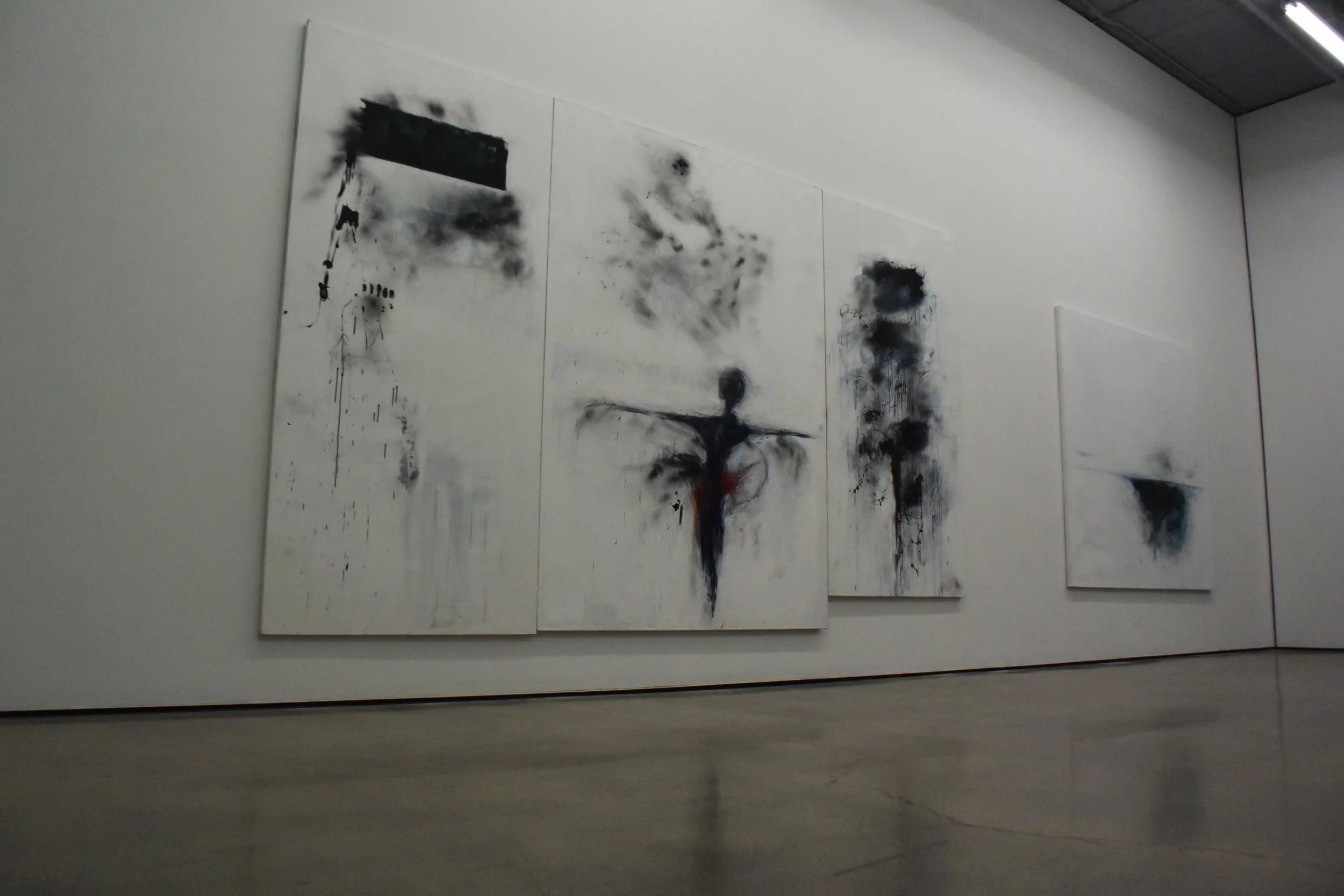
There’s a particular energy that emerges when things are still forming—before they’re finalized, branded, or neatly categorized. It’s the moment when ideas feel most alive, when questions matter more than conclusions, and when experimentation isn’t just allowed but necessary. This space, whether physical or conceptual, is often where the most interesting work begins.
In recent years, the boundaries between disciplines have continued to blur. Creative practices now move fluidly across art, design, technology, and research, resisting fixed definitions in favor of responsiveness and adaptability. What once existed in silos now overlaps—process becomes product, and collaboration becomes a methodology rather than an afterthought. This shift isn’t about novelty for its own sake, but about finding more honest ways to respond to complex social, environmental, and cultural conditions.
At the same time, slowness has re-emerged as a quiet form of resistance. In contrast to constant production and rapid consumption, there’s growing value placed on careful observation, material sensitivity, and sustained inquiry. Projects that take time—whether to build, understand, or experience—invite deeper forms of engagement. They ask audiences not just to look, but to linger.
Context matters. Work does not exist in isolation, and neither do the spaces that hold it. Whether situated in a gallery, a temporary venue, or a digital platform, each setting shapes how something is read and remembered. The relationship between site and content can amplify meaning, creating dialogues that extend beyond the object itself and into the surrounding environment.
Community plays a central role in this ecosystem. Not as a buzzword, but as an active, evolving network of people who show up—sometimes consistently, sometimes unexpectedly. These connections foster exchange, critique, and care, reminding us that cultural production is rarely a solitary act. The most resonant moments often come from shared experiences rather than singular authorship.
There’s also an increasing awareness of impermanence. Temporary installations, short-run events, and limited releases embrace the idea that not everything needs to last forever to have impact. In fact, ephemerality can heighten attention and presence, creating moments that feel urgent precisely because they won’t be repeated in the same way again.
Looking ahead, the challenge isn’t simply to produce more, but to produce with intention. To ask why something needs to exist, who it’s for, and what conditions made it possible. This kind of reflection doesn’t slow progress—it sharpens it. It allows work to remain open, responsive, and grounded in the realities it seeks to engage.
Ultimately, what continues to drive meaningful practice is curiosity: a willingness to ask better questions, to sit with uncertainty, and to remain open to change. In that openness, new forms emerge—sometimes quietly, sometimes all at once—reshaping how we think, make, and connect.
Image subtitle details…
There’s a particular energy that emerges when things are still forming—before they’re finalized, branded, or neatly categorized. It’s the moment when ideas feel most alive, when questions matter more than conclusions, and when experimentation isn’t just allowed but necessary. This space, whether physical or conceptual, is often where the most interesting work begins.
In recent years, the boundaries between disciplines have continued to blur. Creative practices now move fluidly across art, design, technology, and research, resisting fixed definitions in favor of responsiveness and adaptability. What once existed in silos now overlaps—process becomes product, and collaboration becomes a methodology rather than an afterthought. This shift isn’t about novelty for its own sake, but about finding more honest ways to respond to complex social, environmental, and cultural conditions.
At the same time, slowness has re-emerged as a quiet form of resistance. In contrast to constant production and rapid consumption, there’s growing value placed on careful observation, material sensitivity, and sustained inquiry. Projects that take time—whether to build, understand, or experience—invite deeper forms of engagement. They ask audiences not just to look, but to linger.
Context matters. Work does not exist in isolation, and neither do the spaces that hold it. Whether situated in a gallery, a temporary venue, or a digital platform, each setting shapes how something is read and remembered. The relationship between site and content can amplify meaning, creating dialogues that extend beyond the object itself and into the surrounding environment.
Community plays a central role in this ecosystem. Not as a buzzword, but as an active, evolving network of people who show up—sometimes consistently, sometimes unexpectedly. These connections foster exchange, critique, and care, reminding us that cultural production is rarely a solitary act. The most resonant moments often come from shared experiences rather than singular authorship.
There’s also an increasing awareness of impermanence. Temporary installations, short-run events, and limited releases embrace the idea that not everything needs to last forever to have impact. In fact, ephemerality can heighten attention and presence, creating moments that feel urgent precisely because they won’t be repeated in the same way again.
Looking ahead, the challenge isn’t simply to produce more, but to produce with intention. To ask why something needs to exist, who it’s for, and what conditions made it possible. This kind of reflection doesn’t slow progress—it sharpens it. It allows work to remain open, responsive, and grounded in the realities it seeks to engage.
Ultimately, what continues to drive meaningful practice is curiosity: a willingness to ask better questions, to sit with uncertainty, and to remain open to change. In that openness, new forms emerge—sometimes quietly, sometimes all at once—reshaping how we think, make, and connect.
Image subtitle details…
There’s a particular energy that emerges when things are still forming—before they’re finalized, branded, or neatly categorized. It’s the moment when ideas feel most alive, when questions matter more than conclusions, and when experimentation isn’t just allowed but necessary. This space, whether physical or conceptual, is often where the most interesting work begins.
In recent years, the boundaries between disciplines have continued to blur. Creative practices now move fluidly across art, design, technology, and research, resisting fixed definitions in favor of responsiveness and adaptability. What once existed in silos now overlaps—process becomes product, and collaboration becomes a methodology rather than an afterthought. This shift isn’t about novelty for its own sake, but about finding more honest ways to respond to complex social, environmental, and cultural conditions.
At the same time, slowness has re-emerged as a quiet form of resistance. In contrast to constant production and rapid consumption, there’s growing value placed on careful observation, material sensitivity, and sustained inquiry. Projects that take time—whether to build, understand, or experience—invite deeper forms of engagement. They ask audiences not just to look, but to linger.
Context matters. Work does not exist in isolation, and neither do the spaces that hold it. Whether situated in a gallery, a temporary venue, or a digital platform, each setting shapes how something is read and remembered. The relationship between site and content can amplify meaning, creating dialogues that extend beyond the object itself and into the surrounding environment.
Community plays a central role in this ecosystem. Not as a buzzword, but as an active, evolving network of people who show up—sometimes consistently, sometimes unexpectedly. These connections foster exchange, critique, and care, reminding us that cultural production is rarely a solitary act. The most resonant moments often come from shared experiences rather than singular authorship.
There’s also an increasing awareness of impermanence. Temporary installations, short-run events, and limited releases embrace the idea that not everything needs to last forever to have impact. In fact, ephemerality can heighten attention and presence, creating moments that feel urgent precisely because they won’t be repeated in the same way again.
Looking ahead, the challenge isn’t simply to produce more, but to produce with intention. To ask why something needs to exist, who it’s for, and what conditions made it possible. This kind of reflection doesn’t slow progress—it sharpens it. It allows work to remain open, responsive, and grounded in the realities it seeks to engage.
Ultimately, what continues to drive meaningful practice is curiosity: a willingness to ask better questions, to sit with uncertainty, and to remain open to change. In that openness, new forms emerge—sometimes quietly, sometimes all at once—reshaping how we think, make, and connect.
CREDITS
Author and description
INTERVIEWS
Title of interview
iLorem ipsum dolor sit amet, consectetur adipiscing elit, sed do eiusmod tempor incididunt ut labore
Title of interview
iLorem ipsum dolor sit amet, consectetur adipiscing elit, sed do eiusmod tempor incididunt ut labore
Title of interview
iLorem ipsum dolor sit amet, consectetur adipiscing elit, sed do eiusmod tempor incididunt ut labore
Title of interview
iLorem ipsum dolor sit amet, consectetur adipiscing elit, sed do eiusmod tempor incididunt ut labore
LIVE
Title of interview
iLorem ipsum dolor sit amet, consectetur adipiscing elit, sed do eiusmod tempor incididunt ut labore