

L.S. Toy is unmistakably mysterious, appearing more as a constructed figure—unpictured, fittingly low-profile, yet made unavoidably perceptible by the volatile and sometimes polarizing nature of the subjects he takes on, with projects involving counterfeit British banknotes and hyper-mediated anti-war protests. Based in Hackney, Toy began in economics, studying at the University of London and later fine art at the Royal College of Art. Ironically, in those same intense years, he became more obsessed with tracking feeds, subcultures, threads, footage, the complex and spectral cultural phenomena that exist outside of the institution. On the surface, his interests may appear to be a sequence of abrupt shifts, but each environment remains fundamentally tied to his work.
“The screen is the only thing that matters.”
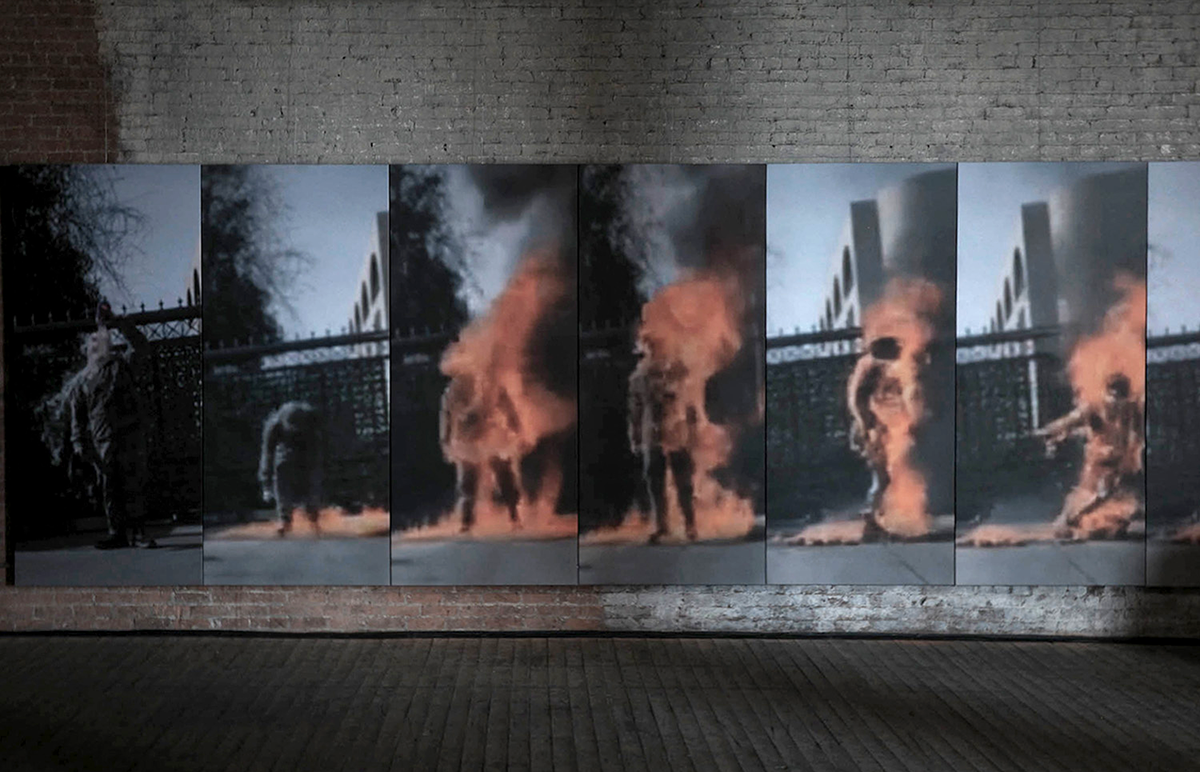
The propulsion of his work is but a natural response to the material he circulates, a continuation of media already marked by systems of value, the circulating spectacles that are consecrated into cultural canon under filters and more filters, publicly exonerated of their associations with reality. “Media is both the subject and the medium,” he says, “and with that, all of reality is up for grabs.” Toy documents collapses in value and meaning by playfully re-exposing memetic imagery, illustrative formats of post-pop art, moving between painting, stencils, and graffiti, while spending most of his time dissecting his condition frame-by-frame—whether it be FPV drone footage out of Ukraine or jumping between surveillance feeds on global networks.
“You’re anywhere but here, all the time, influenced in real time
by things happening everywhere else.”
Overexposed, Toy draws irony from the stale, oversaturated circulation of content on violence, genocide, military power, and exchange value, all the while recognizing that his own work inevitably feeds the same engine. As he states, “Once you take these critical lenses to their extreme, the idea of value goes out the window fast. So the question stops being: How do we make things that provide the world value? What work should be made at all?” Art may have formerly been driven by in-person studio visits or curated exhibitions at galleries and respected institutions, but today, art is just another form of propagating ideas and influence through your phone and computer screen.
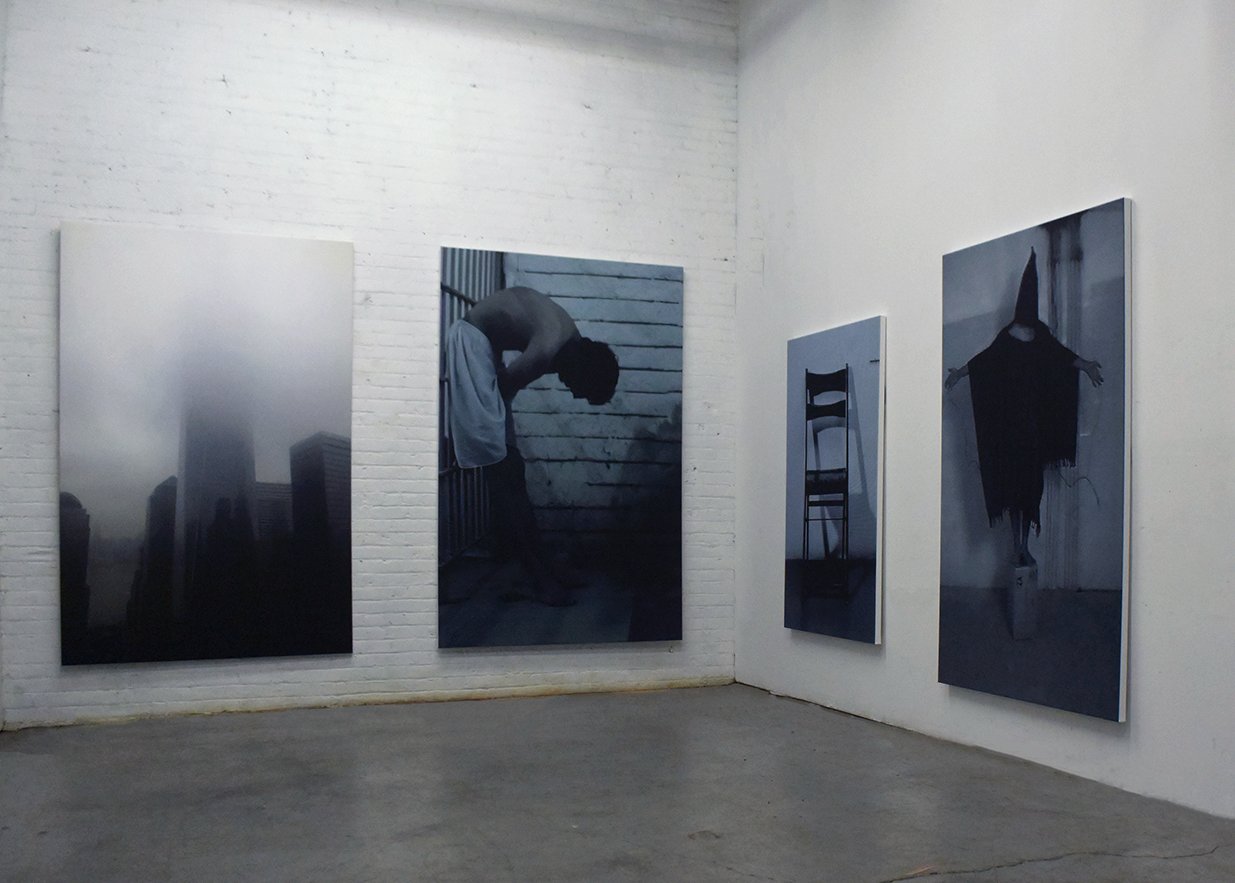
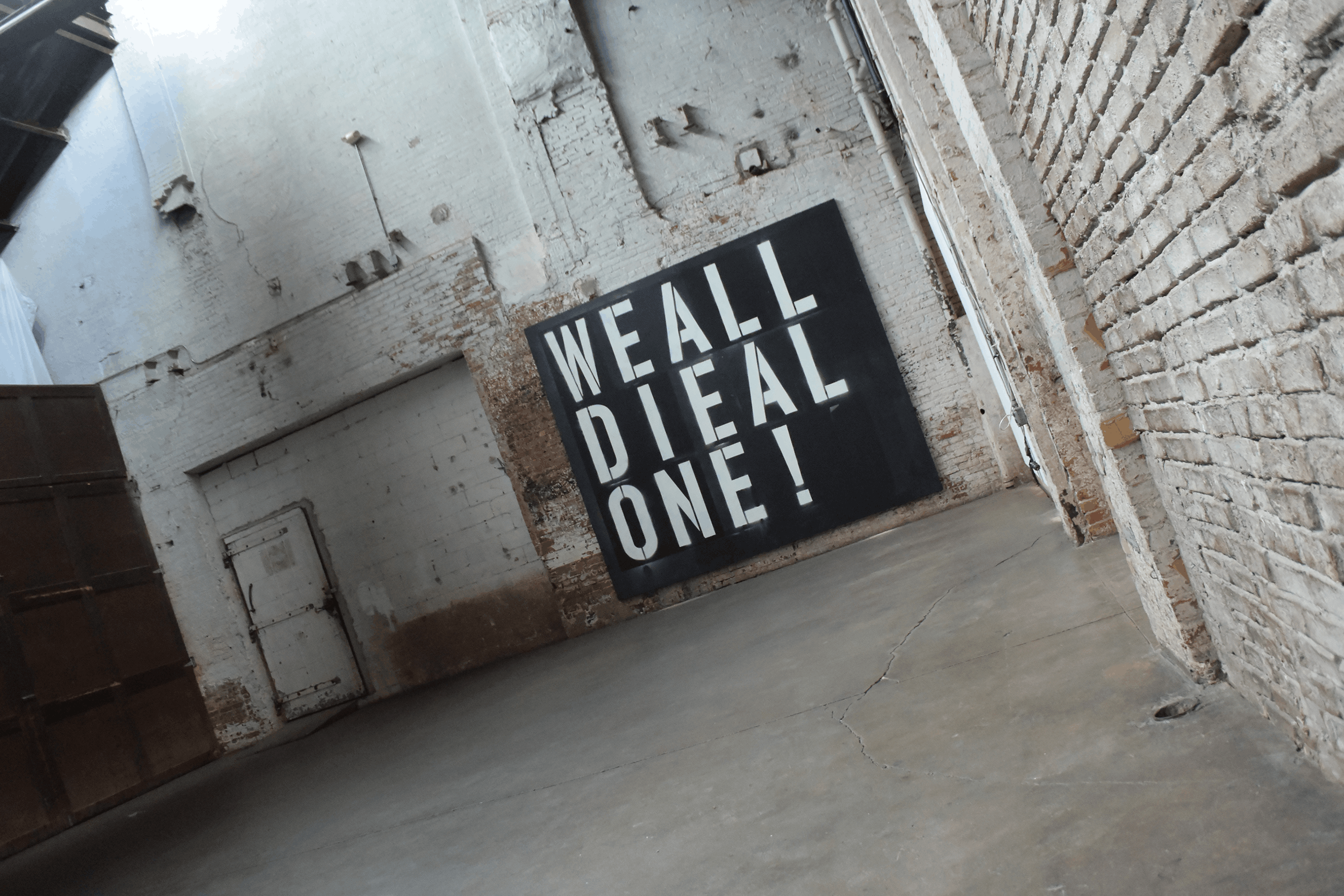
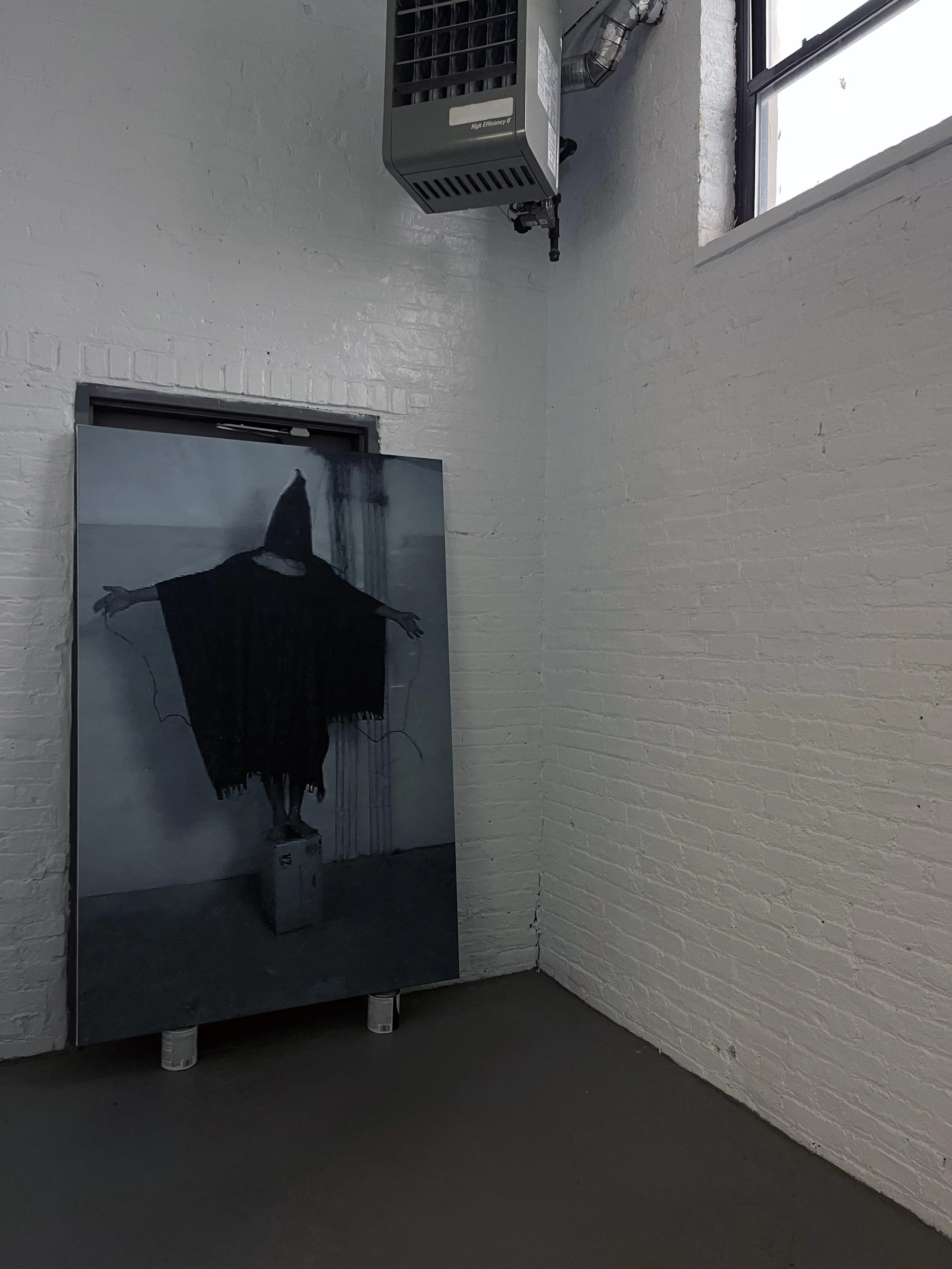
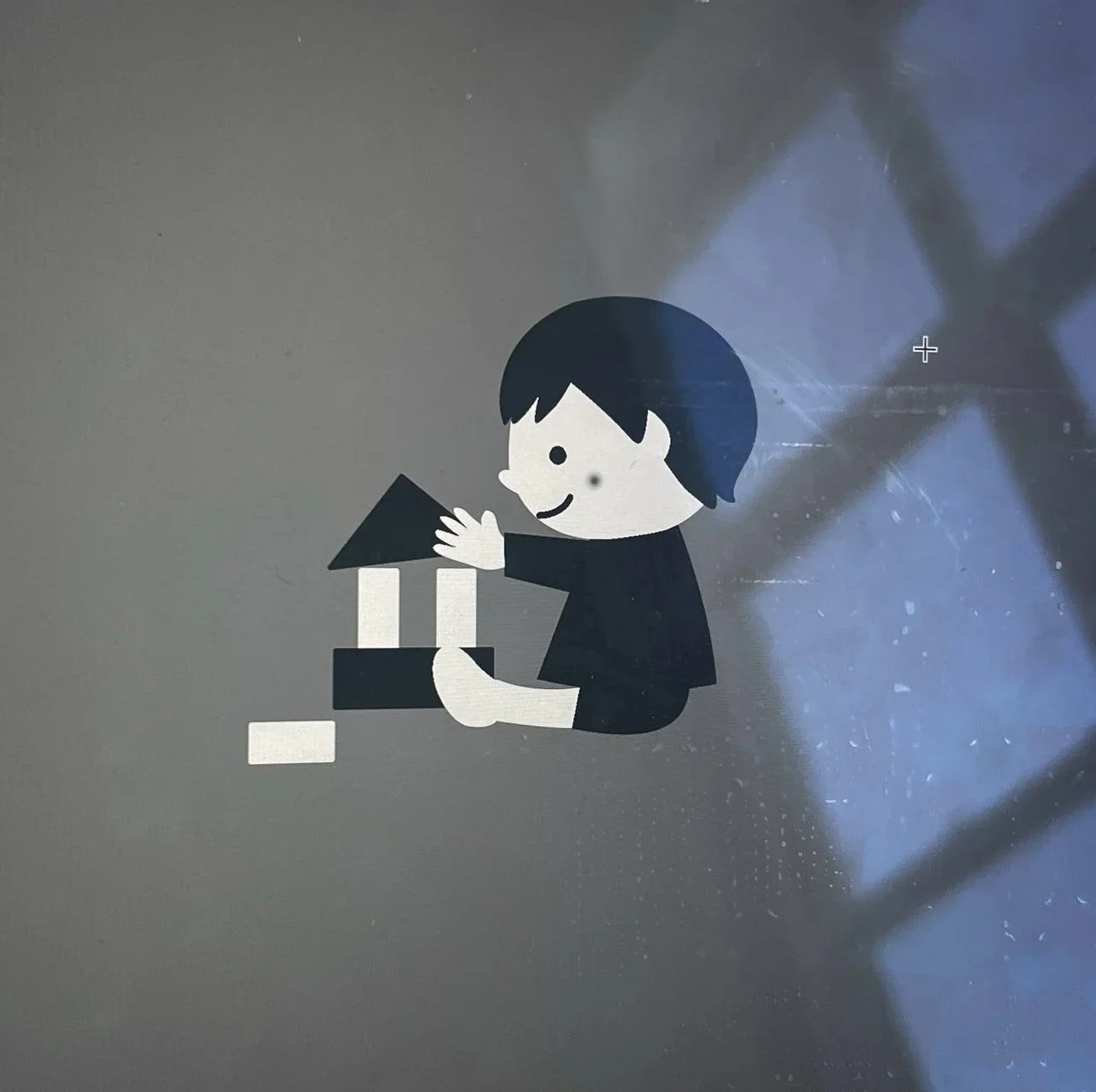
Toy works from within the condition, reinterpreting the painting medium as mediated content and aesthetics, of which few venture with such clarity. While he is positioned to question the role of art, he exemplifies a large knowledge set and technical skill in his hyperrealistic paintings of Abu Ghraib, painting through repetition, stencil, appropriation, all of it washed over by a distinct grey palette. You can read the work as a reactionary bleed-through from an artist who, in having to make this work, likely has considered deeply the role of art and its position for political change or transmuting affect. His works vary in subject while carrying layers of tonal shifts, balancing between pop imagery and childish figures playing with toys to the word “Bomb” being traced over and over again. In moments of controversy or provocation, there is always an undertone of play, some element of meta-irony. Even in his reluctance to call himself an artist, he seems amused by the weight people often give the title, and in doing so, challenges us to question our own complacency. Toy works from an end-game backwards rather than from a mid-position trying to secure itself—an uncompromising, harsh position to be in, but one he accepts out of necessity.
 L.S Toy. Electric, c. 2024.
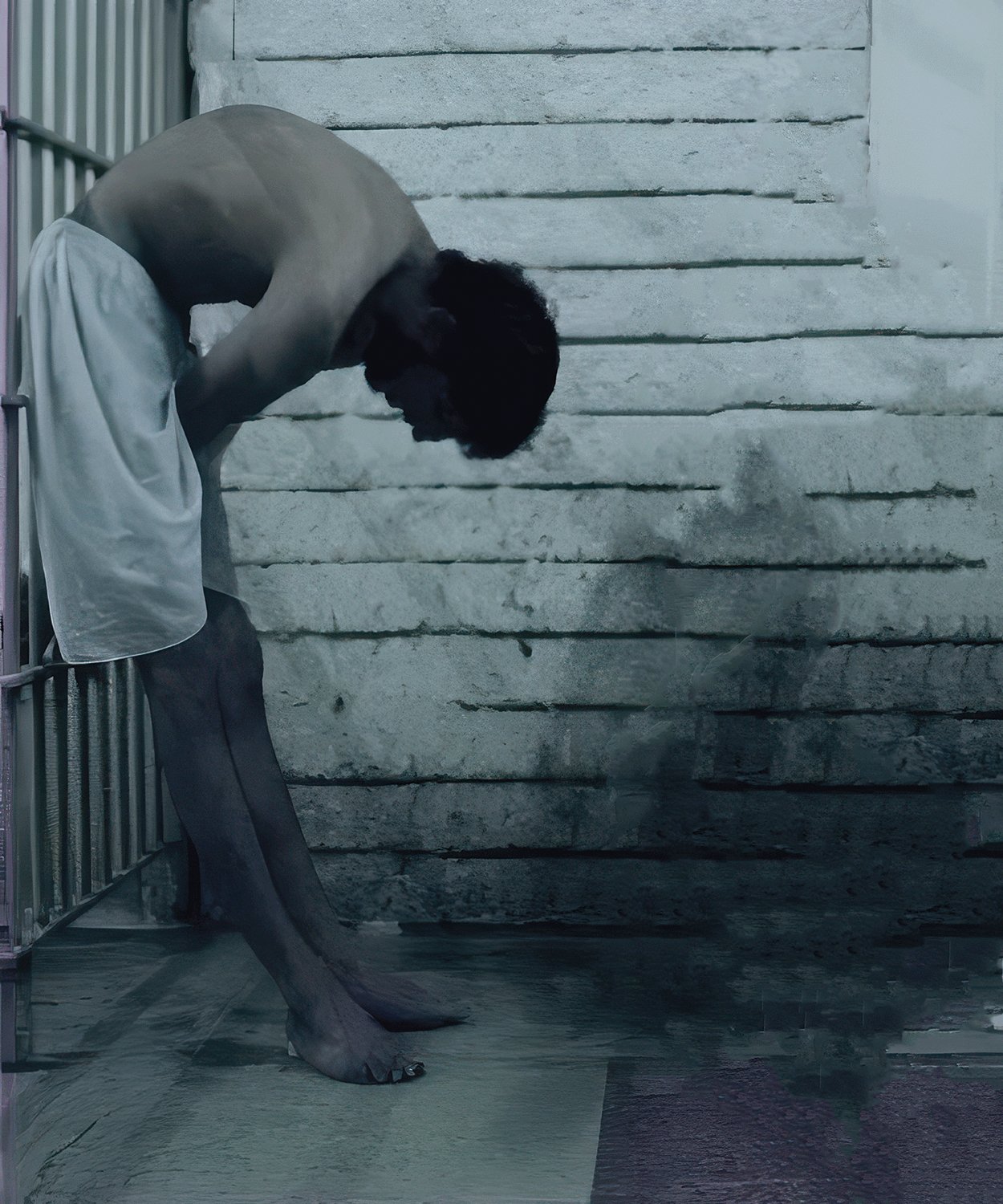 L.S Toy. Freedom Tax, c. 2024.
 L.S Toy. Olympic "America", c. 2024.
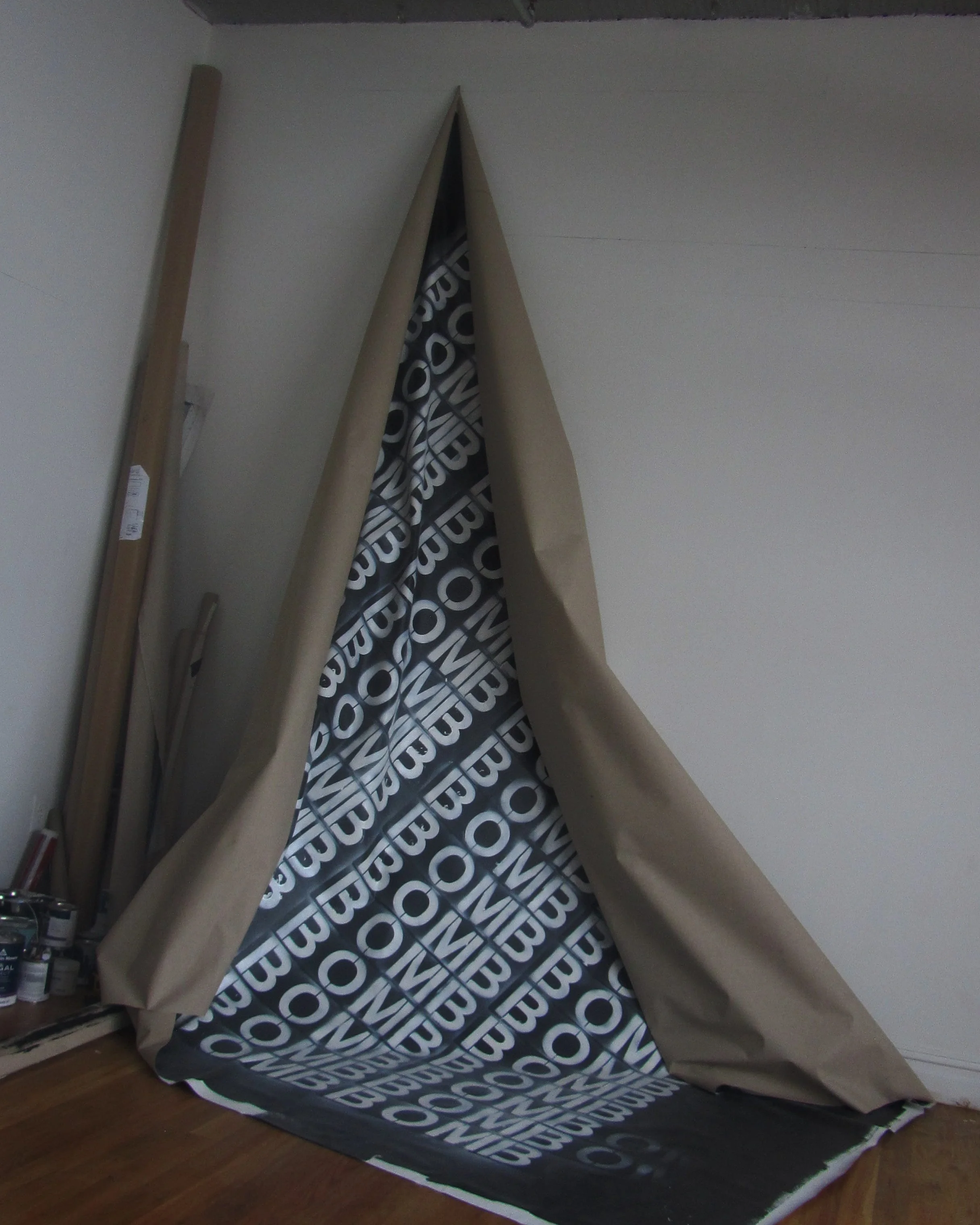 L.S Toy. BOMB, detail, c. 2024.
 L.S Toy. Advertise Here, c. 2024. Acrylic on vinyl.
 L.S Toy. EF-1 Series, c. 2024.
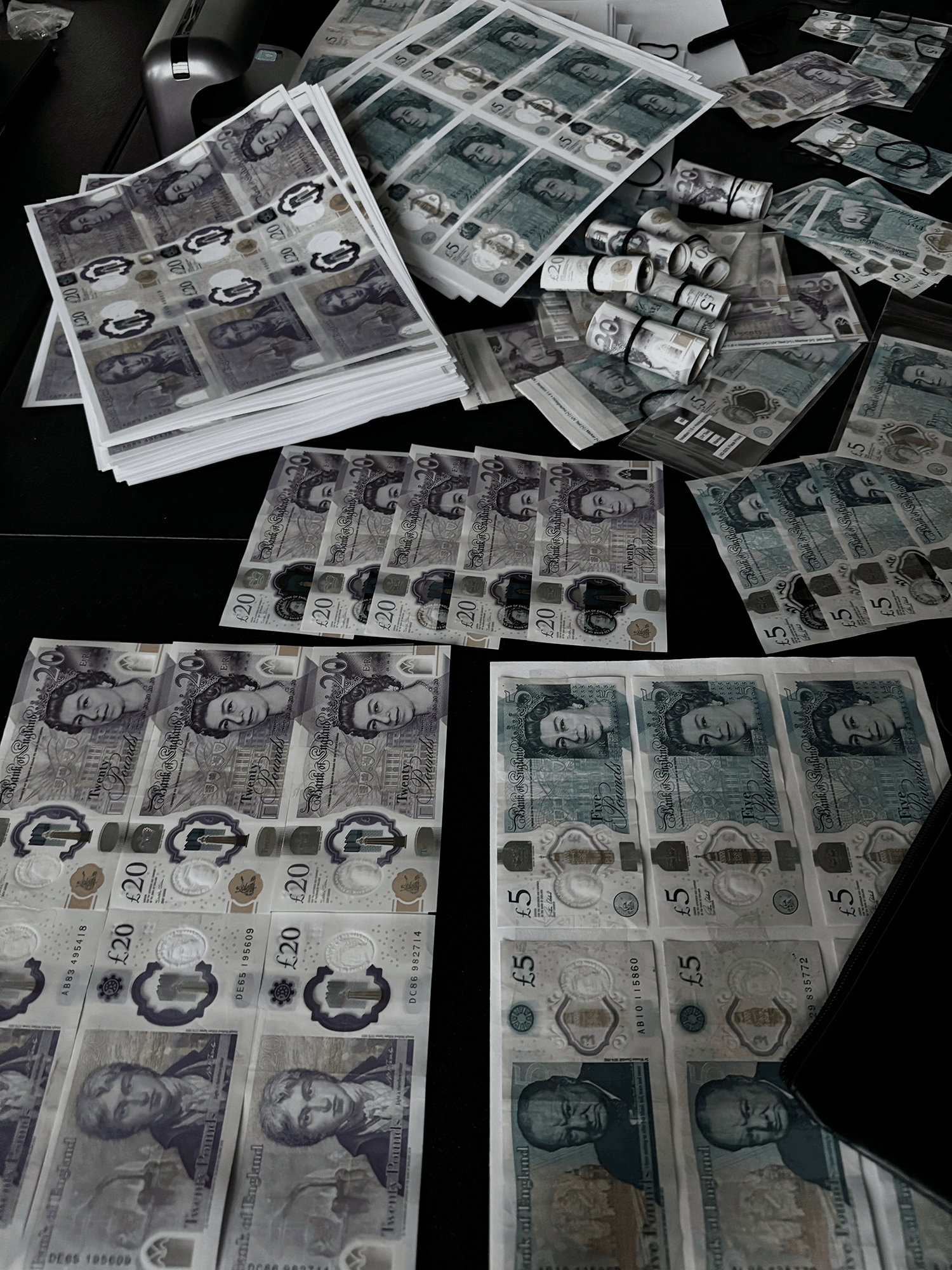

Is it all a game? Is it all media? Toy appears largely unconcerned with the outside chatter over art’s categorical and semantic distinctions. Nevertheless, he is still forced to face the question of what it means to make art in this time and of this time, but also against this time, where the truest potential most likely lies. While sensationalist critics offer lukewarm interpretations, describing the work as "corporate, government shit," what they fail to see is that here is an artist, fully exposed, sitting alone with his games and blocks, aims unclear, but engaging with the world on the edge of its canon. Meanwhile, the work leaves its mark in a grey-market zone, operating at several points within the mediated atmosphere of its era.
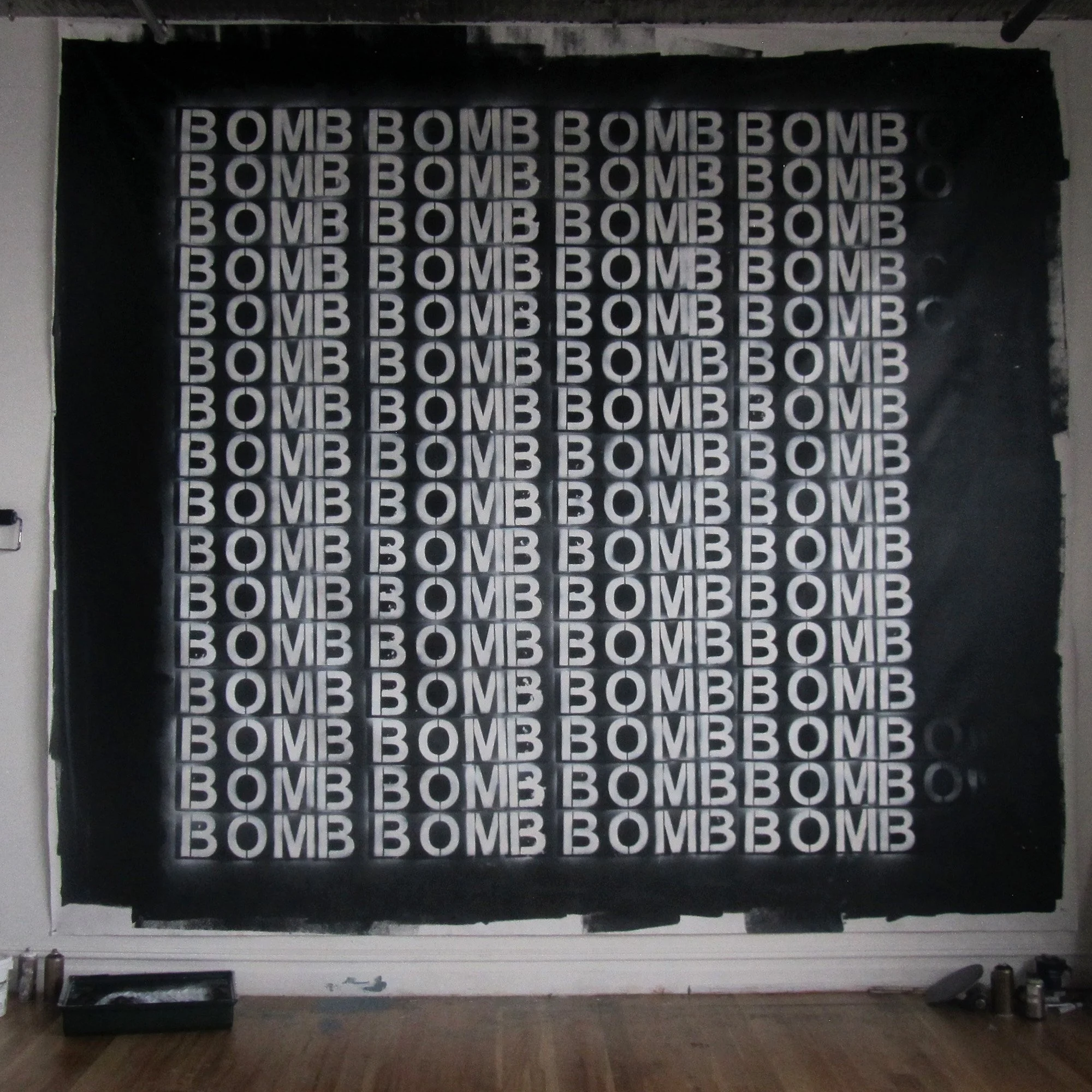
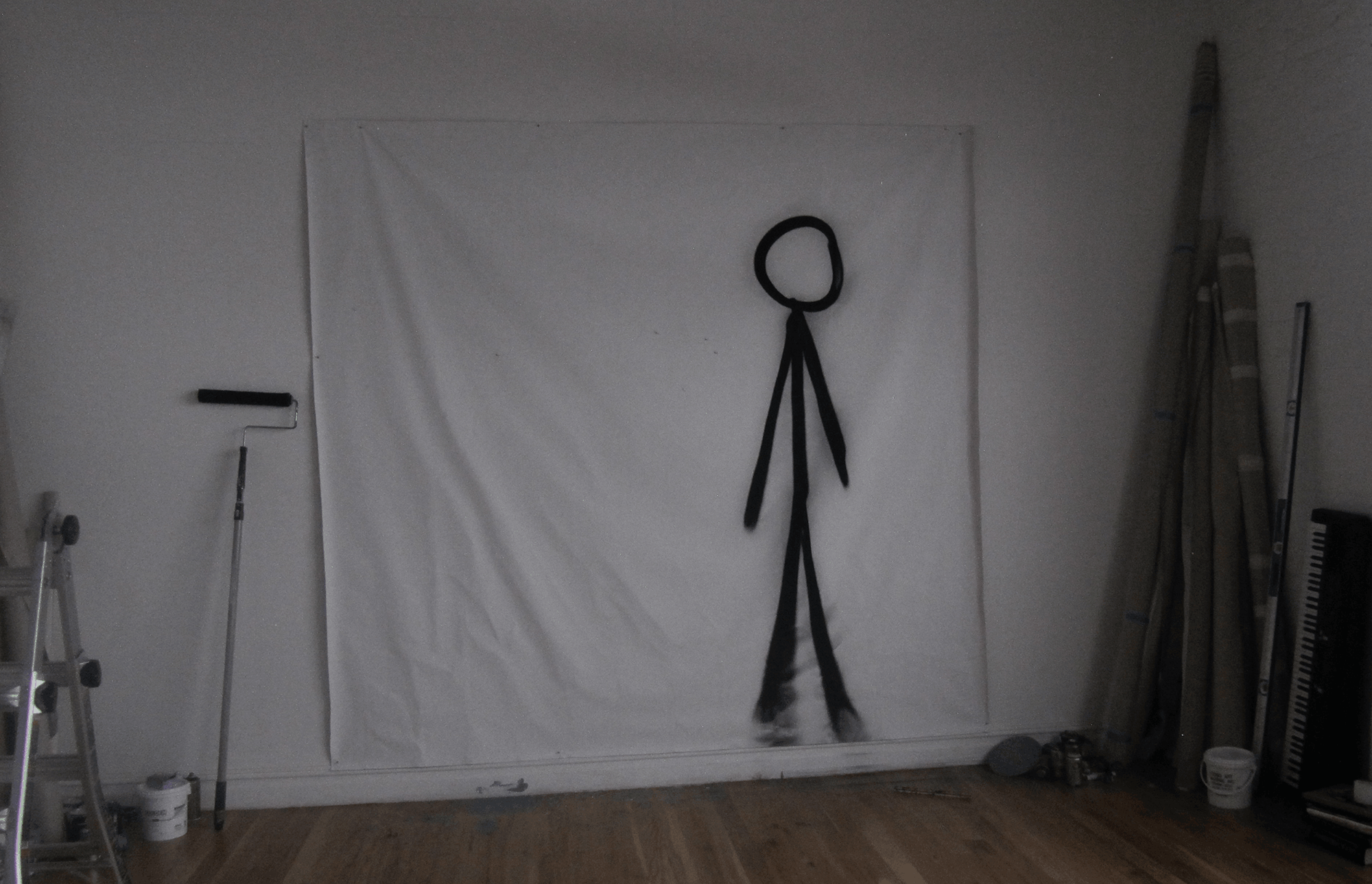
L.S. Toy shows outside the gallery establishment—unannounced exhibitions in warehouse spaces across London, Berlin, and Brooklyn—no studio visits, short runs, much of it moving through Base 36, the independent cultural network spanning the RP.1 label and curatorial arm. Recently named among the cohort associated with Residualism, the movement identified around Agency Media Group, Toy remains difficult to categorize. What is discernible is a practice tracing systems of power, underwritten by a sustained engagement with critical theory.
CREDITS
Artwork by L.S. Toy
Written by Claro Concetto
Image courtesy of L.S. Toy